


Can Music Truly Be Universal?

What does it take for someone to be moved by music they do not understand?
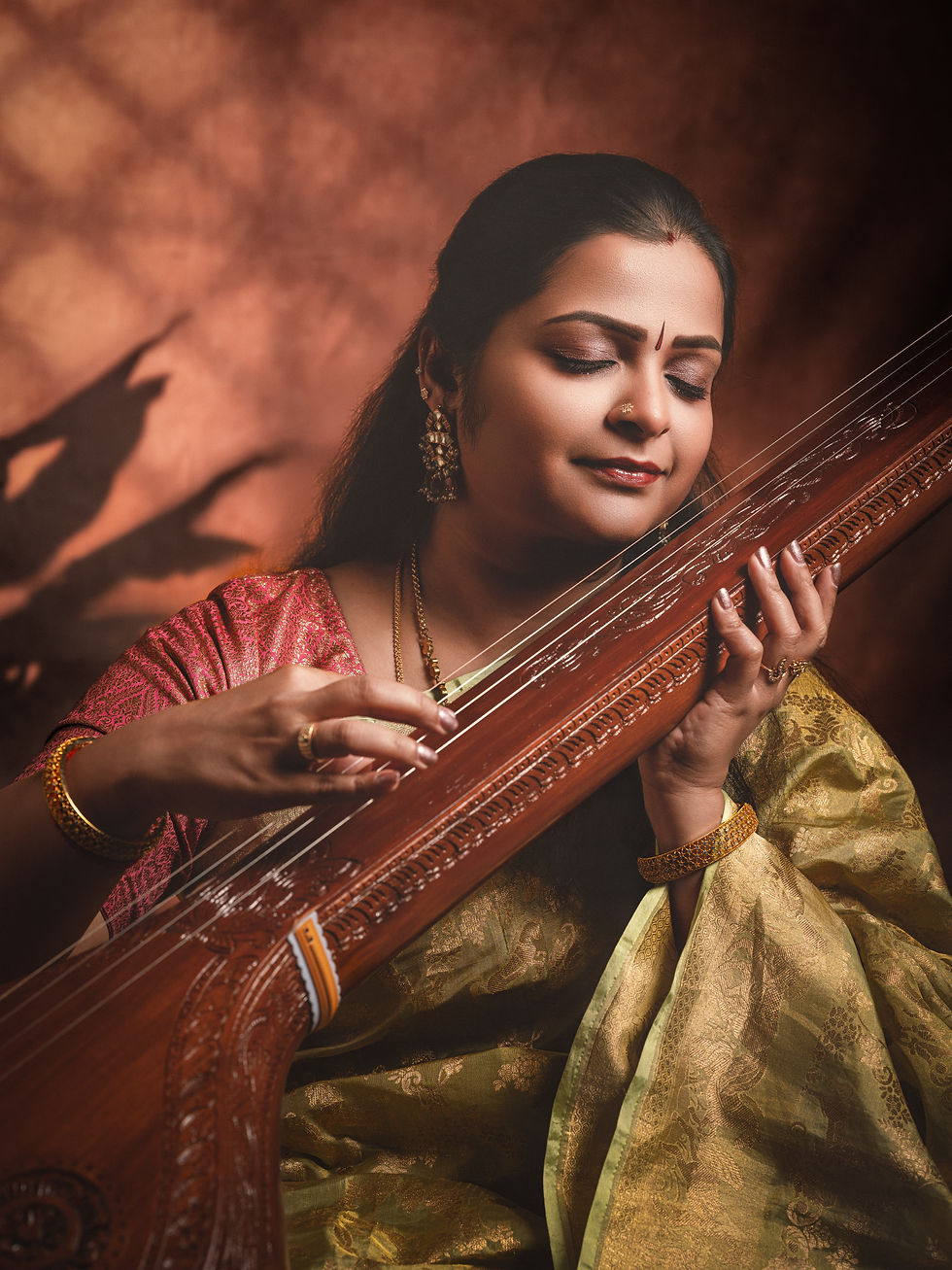
That question came back to me while performing Carnatic vocal music from South India at the A to Jazz Festival.
I was the first performer in a world music showcase on an open-air stage. People were moving between sets, talking, passing through. Most had likely never encountered Carnatic music before, and I did not assume any shared reference point between us.
I chose to present the music in an intimate form, much as I would in a concert setting. I offered brief introductions before and after each piece, just enough to give context, but without attempting to translate the music or frame it in something more familiar.
Open-air festivals can be challenging spaces for subtle music. Attention is fragmented, and sound competes with movement, conversation and curiosity about what comes next.
Yet something shifted as the performance unfolded.
People who had been walking past began to slow down. Some moved closer to the stage. A few sat on the ground in front. What began as a passing audience gradually became more still, more present. Not everyone stayed, and not everyone connected with the music. But enough did to make me pause.
It made me look at an old assumption from a different angle.
We often say that music is a universal language. I have never found that statement entirely convincing. Music is shaped deeply by culture, memory and listening habits. A raga does not carry the same internal map as a jazz improvisation or a Norwegian folk melody. Without shared vocabulary, there is no immediate “understanding” in the usual sense.
And yet, that evening suggested something else might also be true.
Perhaps connection does not begin with understanding.
It may begin with ATTENTION.
Reflecting on that performance, I found myself wondering whether universality—if the word is useful at all—does not reside in the music itself, but in the conditions around it. In the interaction between performer, audience and setting. In what is offered, and what is received.
Authenticity may have mattered. I did not reshape the music to fit the context. I stayed with its own language. Ironically, that seemed to invite closeness rather than distance. The brief spoken context helped orient listeners, but the music itself was allowed to remain unfamiliar.
Still, one performance is not evidence of anything definitive. It does not answer the larger It simply opened something.
Because what stayed with me was not the idea that Carnatic music was universally understood. It was something quieter: that people with no shared musical vocabulary chose to stop, stand still, and listen.
So the question shifts.
What does it take for someone to be moved by music they do not understand?
Is it melody, rhythm, timbre, or voice? Is it curiosity? Is it the presence of the performer? Or is it something on the listener’s side—the willingness to suspend the need for immediate interpretation, and simply remain with the sound?
I do not yet know.
The more I think about it, the less it feels like a single answer waiting to be found.
It feels more like a set of conditions that occasionally align.
As I continue performing in different countries and for different audiences, I find myself becoming less interested in asking whether music is universal, and more interested in understanding what enables genuine listening across cultures.
Perhaps that is where the real inquiry begins...
I still do not know whether music is truly universal.
But I do know that, on one evening at an open-air jazz festival, people who shared neither language nor musical reference with Carnatic music chose to pause and listen.
That experience has not answered the question.question, nor was it meant to.
It has only made it more alive.


Comments